Black Spot on Roses – How to Recognize, Treat, and Prevent the Disease
Black Spot on Roses – How to Recognize, Treat, and Prevent the Disease
Black Spot on Roses – How to Recognize, Treat, and Prevent the Disease
Tiko Abazadze
8 minutes
Rose Care
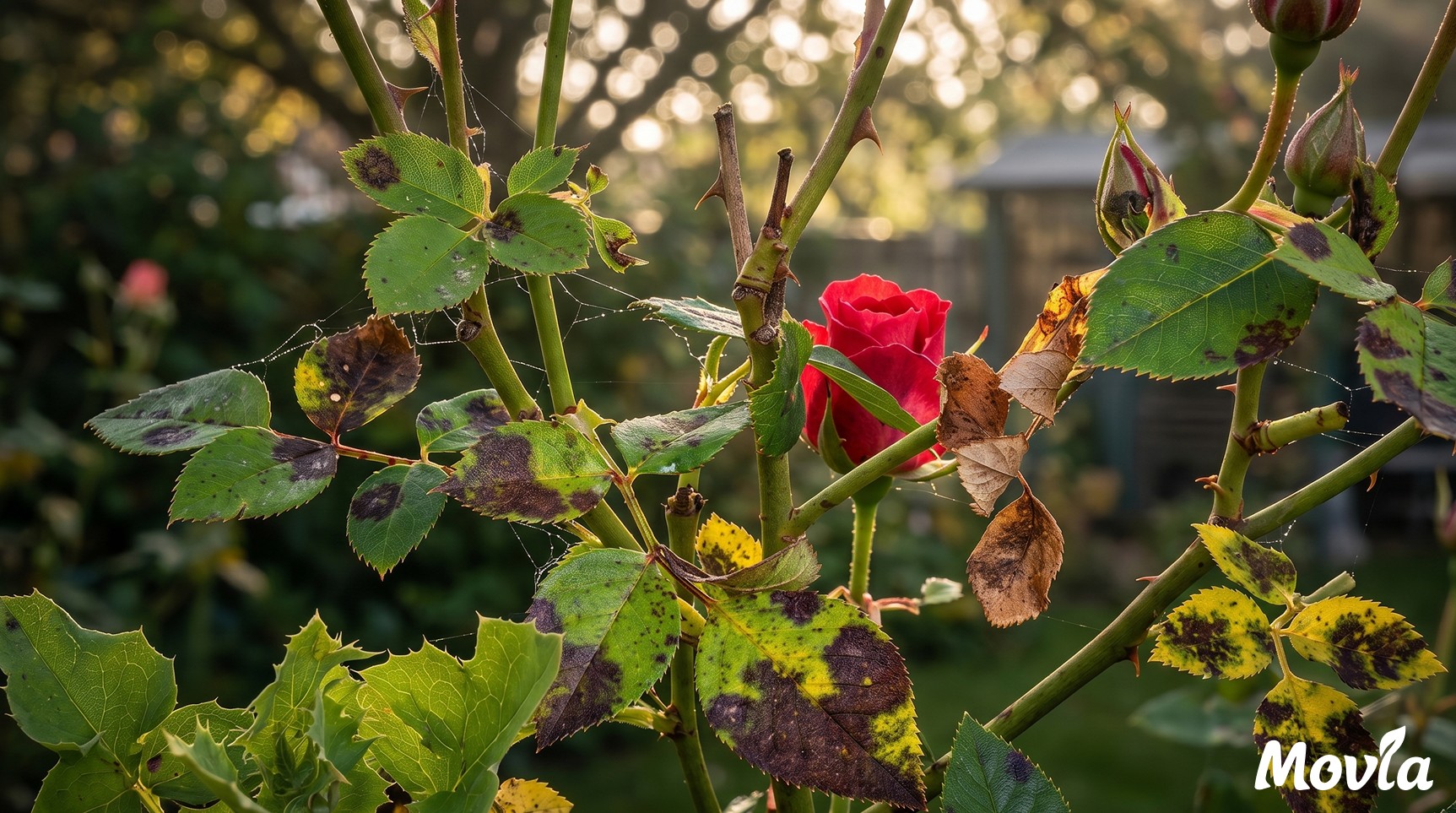
The rose is one of the most beautiful and popular plants in gardens and yards, but its care also involves certain difficulties. The most common problem gardeners encounter is black spot — a fungal disease that spreads quickly and seriously damages the plant's health.
If dark spots appear on rose leaves, the leaves turn yellow, or start to fall, you are most likely dealing with this disease. Timely action is very important, because if left unattended, the plant weakens, growth slows, and flowering is significantly reduced.
The rose is one of the most beautiful and popular plants in gardens and yards, but its care also involves certain difficulties. The most common problem gardeners encounter is black spot — a fungal disease that spreads quickly and seriously damages the plant's health.
If dark spots appear on rose leaves, the leaves turn yellow, or start to fall, you are most likely dealing with this disease. Timely action is very important, because if left unattended, the plant weakens, growth slows, and flowering is significantly reduced.
Black spot is caused by a fungus that becomes especially active in damp and warm conditions. Frequent rain, poor air circulation, water left on the leaves, and planting plants too densely all contribute to the rapid spread of the disease. The fungus spores spread through wind, raindrops, irrigation water, and infected leaves. That is why one diseased shrub can eventually spread the disease throughout the entire garden.
Black spot is caused by a fungus that becomes especially active in damp and warm conditions. Frequent rain, poor air circulation, water left on the leaves, and planting plants too densely all contribute to the rapid spread of the disease. The fungus spores spread through wind, raindrops, irrigation water, and infected leaves. That is why one diseased shrub can eventually spread the disease throughout the entire garden.
How to recognize black spot?
The disease has several clear signs:
Round or irregular black spots appear on the leaves
The leaves around the spots turn yellow
Damaged leaves fall off prematurely
The plant becomes bare from the bottom
New shoots weaken
Flowering decreases
Initially, the problem appears on the lower leaves, then moves upward.
What damage does it cause to roses?
Black spot is not just a visual problem. When the plant loses its leaves, photosynthesis decreases, energy drops, and the rose can no longer develop properly. As a result:
The flowers become smaller
The plant blooms less
Winter hardiness decreases
Susceptibility to other diseases increases
How to treat black spot on roses?
If the disease appears, quick action is important.
1. Remove diseased leaves
Collect all damaged leaves from the plant and the ground. Leaving them behind causes the disease to spread again.
2. Improve air circulation
If the bush is too dense, prune the excess branches. Good ventilation reduces humidity.
3. Water properly
Water should be applied at the root, not on the leaves. Watering in the morning is best.
4. Use antifungal agents
If necessary, fungicides or organic sprays are used. Spraying should be repeated regularly according to instructions.
5. Regular monitoring
Inspect the plant several times a week so you can spot the disease at an early stage.
How to prevent it?
Prevention is always more effective than treatment.
Best preventive methods:
Plant roses in a sunny spot
Leave space between plants
Do not water in the evening
Do not wet the leaves
Clean up debris seasonally
Use protective treatments preventively in spring
Choose disease-resistant varieties
Which roses are more resistant?
In modern breeding, there are many varieties that have relatively high resistance to black spot. When buying a new rose, always pay attention to the description and choose disease-resistant varieties.
This is especially important if you live in a humid region or have already had a similar problem in previous years.
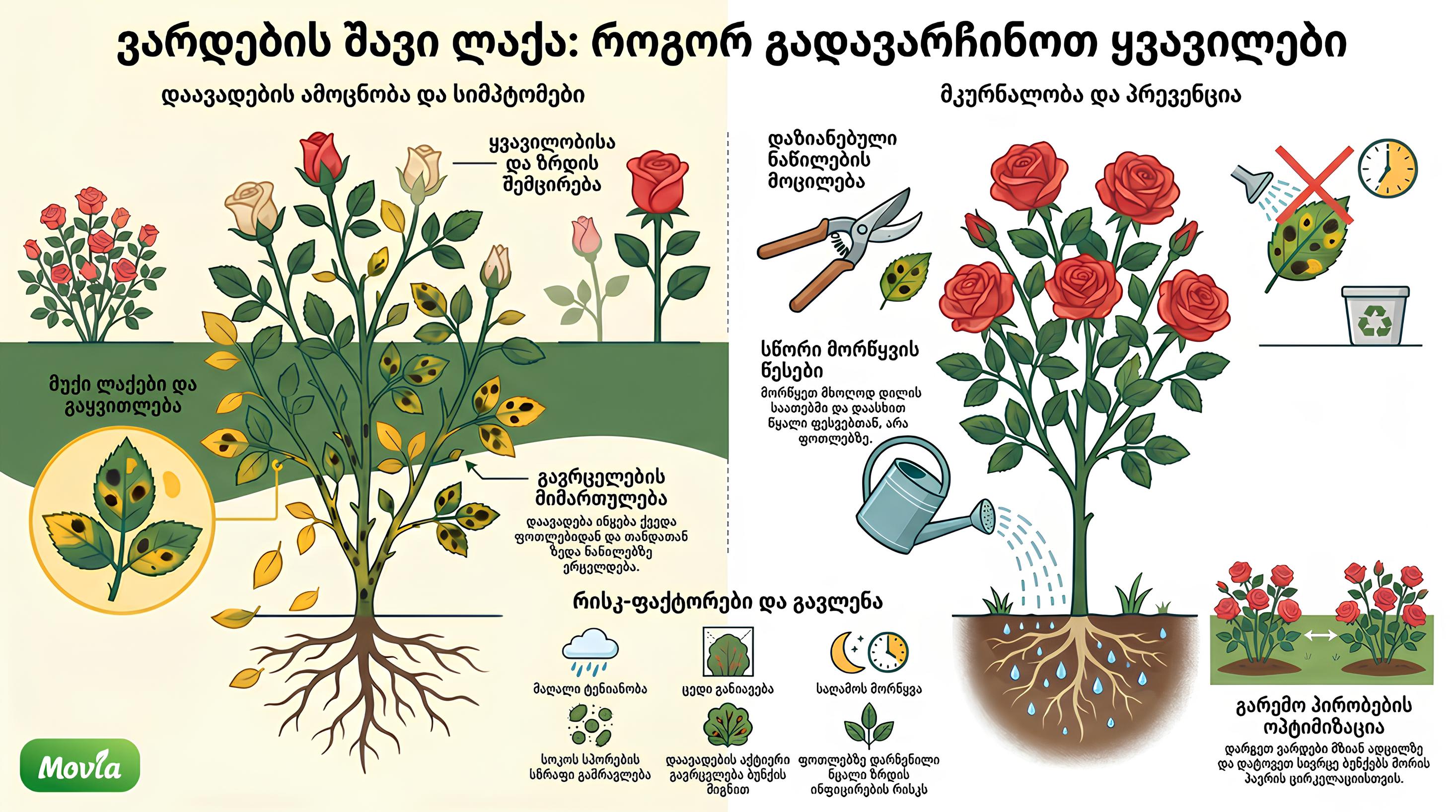
How to recognize black spot?
The disease has several clear signs:
Round or irregular black spots appear on the leaves
The leaves around the spots turn yellow
Damaged leaves fall off prematurely
The plant becomes bare from the bottom
New shoots weaken
Flowering decreases
Initially, the problem appears on the lower leaves, then moves upward.
What damage does it cause to roses?
Black spot is not just a visual problem. When the plant loses its leaves, photosynthesis decreases, energy drops, and the rose can no longer develop properly. As a result:
The flowers become smaller
The plant blooms less
Winter hardiness decreases
Susceptibility to other diseases increases
How to treat black spot on roses?
If the disease appears, quick action is important.
1. Remove diseased leaves
Collect all damaged leaves from the plant and the ground. Leaving them behind causes the disease to spread again.
2. Improve air circulation
If the bush is too dense, prune the excess branches. Good ventilation reduces humidity.
3. Water properly
Water should be applied at the root, not on the leaves. Watering in the morning is best.
4. Use antifungal agents
If necessary, fungicides or organic sprays are used. Spraying should be repeated regularly according to instructions.
5. Regular monitoring
Inspect the plant several times a week so you can spot the disease at an early stage.
How to prevent it?
Prevention is always more effective than treatment.
Best preventive methods:
Plant roses in a sunny spot
Leave space between plants
Do not water in the evening
Do not wet the leaves
Clean up debris seasonally
Use protective treatments preventively in spring
Choose disease-resistant varieties
Which roses are more resistant?
In modern breeding, there are many varieties that have relatively high resistance to black spot. When buying a new rose, always pay attention to the description and choose disease-resistant varieties.
This is especially important if you live in a humid region or have already had a similar problem in previous years.
Conclusion
Summary
Black spot on roses is a common, but manageable problem. Proper watering, hygiene, pruning, and timely treatment will help you maintain the plant's health.
If you notice the first signs in time and act quickly, your roses will bloom abundantly again throughout the season and add special beauty to the garden.
Blog
Read other articles
Blog
Read other articles
Blog
Read other articles



Caring for us is easy
Download the "Movla" app and find the specialist you need, or fill out an application and become a gardener yourself!
simple
reliable
safe

Caring for us is easy
Download the "Movla" app and find the specialist you need, or fill out an application and become a gardener yourself!
Caring for us is easy
Download the "Movla" app and find the specialist you need, or fill out an application and become a gardener yourself!