How is your plant fertilized?
How is your plant fertilized?
How is your plant fertilized?
Sali Beruchashvili
7 - 8 minutes
Soil and Health
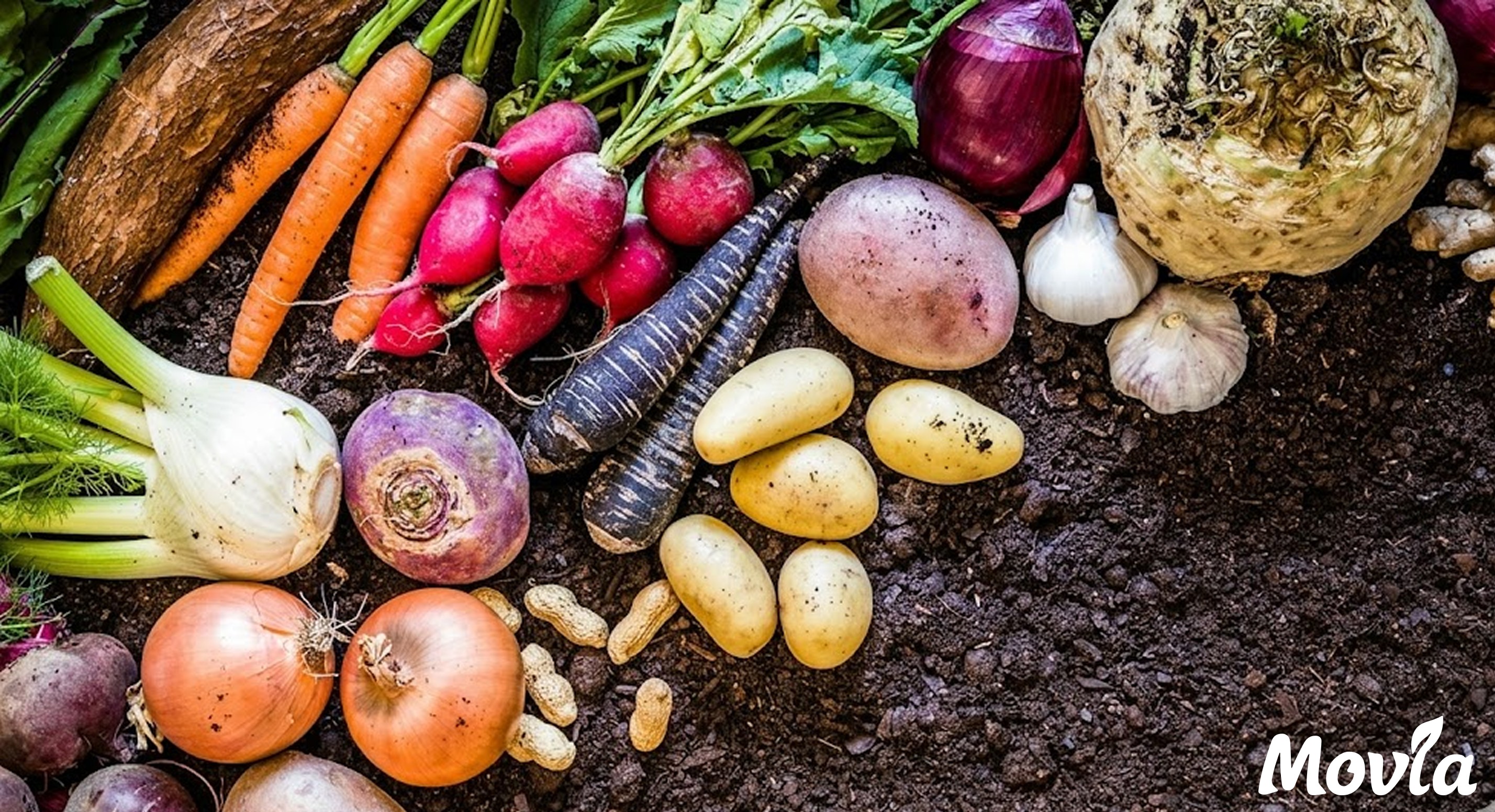
We often say: “We are what we eat.” However, David Montgomery and Anne Biklé offer a deeper perspective: “We are what our food eats.” Gardening is not just watering plants; it is a complex connection with the microscopic world of the soil.
If the soil is “hungry” and depleted, the plant cannot absorb the minerals it needs, causing our food to lose the vital strength our bodies need.
We often say: “We are what we eat.” However, David Montgomery and Anne Biklé offer a deeper perspective: “We are what our food eats.” Gardening is not just watering plants; it is a complex connection with the microscopic world of the soil.
If the soil is “hungry” and depleted, the plant cannot absorb the minerals it needs, causing our food to lose the vital strength our bodies need.
Healthy soil is not just dirt; it is a living system that supplies plants with minerals and immunity. Proper soil management is the foundation of your health.
Healthy soil is not just dirt; it is a living system that supplies plants with minerals and immunity. Proper soil management is the foundation of your health.
Soil microbiome: The garden’s “gut”
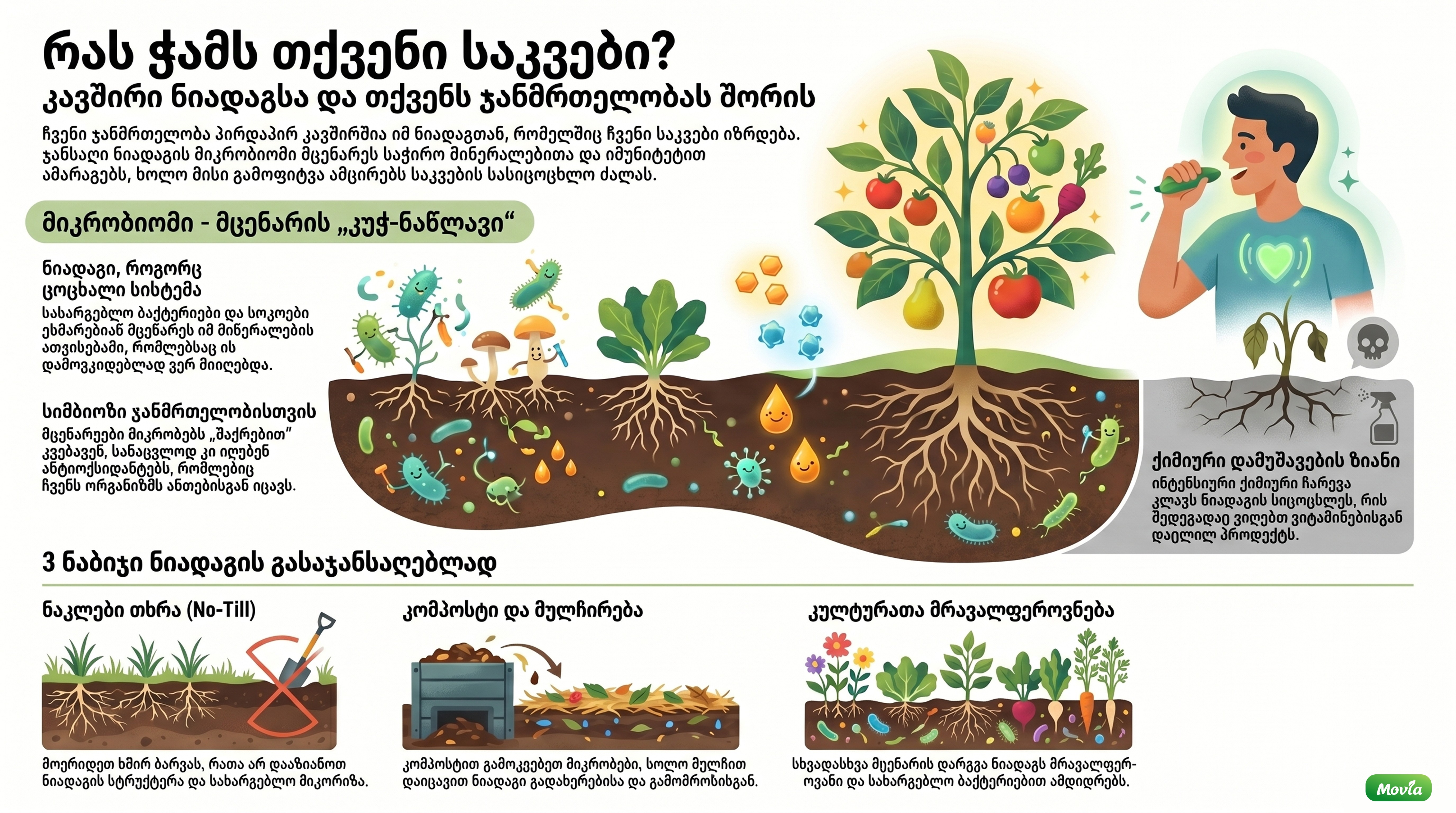
Like our bodies, plants also need beneficial bacteria and fungi. Experts in organic farming explain that:
Symbiosis and plant nutrition: Plants release carbohydrates (“sugars”) from their roots to attract beneficial microbes. In return, these microbes supply the plant with minerals that it could not absorb on its own.
Phytochemicals and immunity: Healthy soil helps plants produce antioxidants and phytochemicals. These substances protect our bodies from inflammatory processes and chronic diseases.
Soil erosion and quality: Intensive chemical soil treatment kills life in the soil. As a result, we get visually beautiful but vitamin-depleted produce.
How can we improve the soil in our garden?
No-Till: Frequent digging damages soil structure and kills beneficial fungi (mycorrhizae). Try to keep soil cultivation as shallow and non-invasive as possible.
Organic fertilizer and compost: Microbes need food. Composting is the best way to revive the soil and improve plant nutrition.
Mulching: Covering the soil surface with organic material (straw, bark) protects it from overheating and retains moisture, which is essential for the survival of microorganisms.
Crop diversity: Planting different types of plants means enriching the soil with different types of bacteria, which makes garden care more efficient.
Soil microbiome: The garden’s “gut”
Like our bodies, plants also need beneficial bacteria and fungi. Experts in organic farming explain that:
Symbiosis and plant nutrition: Plants release carbohydrates (“sugars”) from their roots to attract beneficial microbes. In return, these microbes supply the plant with minerals that it could not absorb on its own.
Phytochemicals and immunity: Healthy soil helps plants produce antioxidants and phytochemicals. These substances protect our bodies from inflammatory processes and chronic diseases.
Soil erosion and quality: Intensive chemical soil treatment kills life in the soil. As a result, we get visually beautiful but vitamin-depleted produce.
How can we improve the soil in our garden?
No-Till: Frequent digging damages soil structure and kills beneficial fungi (mycorrhizae). Try to keep soil cultivation as shallow and non-invasive as possible.
Organic fertilizer and compost: Microbes need food. Composting is the best way to revive the soil and improve plant nutrition.
Mulching: Covering the soil surface with organic material (straw, bark) protects it from overheating and retains moisture, which is essential for the survival of microorganisms.
Crop diversity: Planting different types of plants means enriching the soil with different types of bacteria, which makes garden care more efficient.
Conclusion
Summary
Professional garden care is not just aesthetics — it is care for your family's health. When you make soil health a priority, you directly improve the quality of the food that ultimately reaches your table. Healthy soil means healthy people.
Would you like to learn more about the condition of your garden's soil? Movla specialists will help you with soil analysis and its organic enrichment, so that your garden can give you the most beneficial yield possible.
👉 Improve the health of your soil with us: https://movla.ge/
Blog
Read other articles
Blog
Read other articles
Blog
Read other articles



Caring for us is easy
Download the "Movla" app and find the specialist you need, or fill out an application and become a gardener yourself!
simple
reliable
safe
Caring for us is easy
Download the "Movla" app and find the specialist you need, or fill out an application and become a gardener yourself!
Caring for us is easy
Download the "Movla" app and find the specialist you need, or fill out an application and become a gardener yourself!