The art of storing the harvest
The art of storing the harvest
The art of storing the harvest
Sali Beruchashvili
7 - 8 minutes
Harvesting and storage
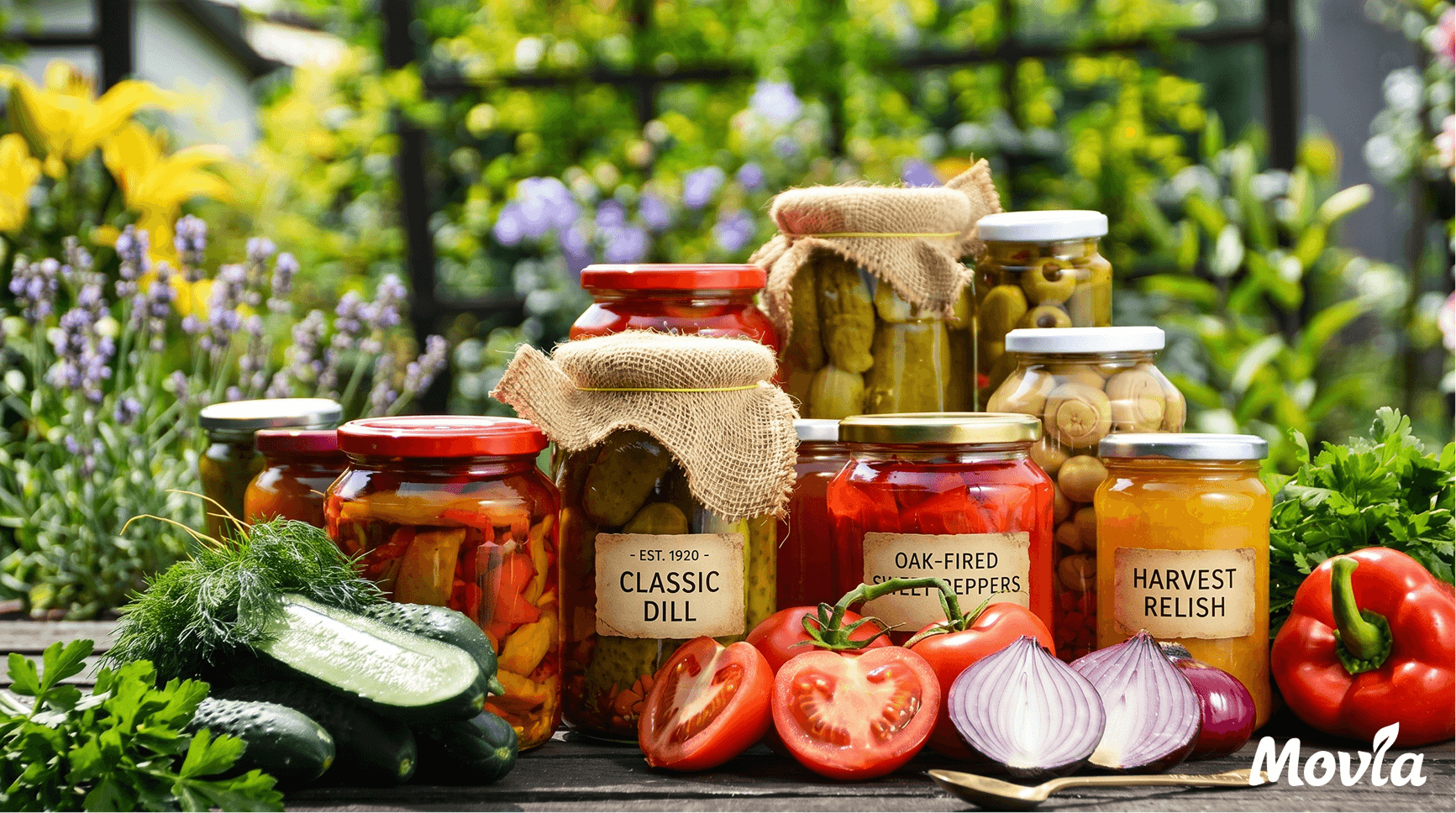
The most enjoyable stage of establishing a garden is harvesting, although often we get so much produce that it cannot be used all at once. Instead of letting your hard work go to waste, learn how to store it properly. Food preservation is not just the traditional “pickles and compote” — it is a set of methods that help you preserve vitamins and flavor as much as possible.
The most enjoyable stage of establishing a garden is harvesting, although often we get so much produce that it cannot be used all at once. Instead of letting your hard work go to waste, learn how to store it properly. Food preservation is not just the traditional “pickles and compote” — it is a set of methods that help you preserve vitamins and flavor as much as possible.
Preserving the harvest means conserving the taste and energy of summer for the coldest days of the year.
Preserving the harvest means conserving the taste and energy of summer for the coldest days of the year.
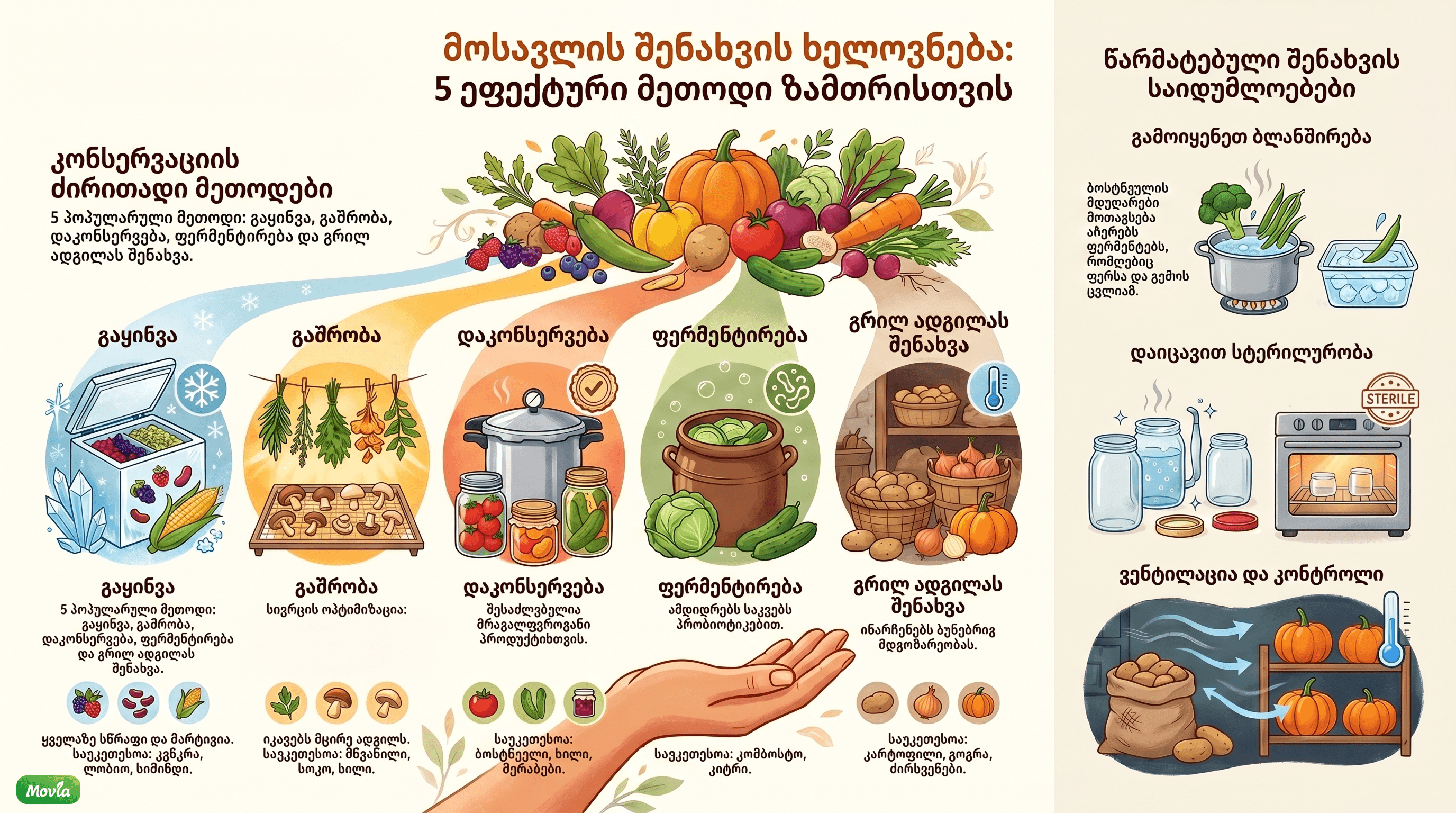
5 Popular Preservation Methods:
Freezing (Freezing): The fastest method. Ideal for berries, green beans, and corn.
Pro tip: Use blanching (briefly placing vegetables in boiling water) to stop the enzymes that change color and flavor.
Drying/Dehydration (Drying): Best for herbs, mushrooms, and fruit. Dried produce takes up little space and keeps for a long time. You can use either the sun or a special dehydrator.
Water-bath canning (Canning): A classic method for tomatoes, sauces, and jams. High-acid foods are ideal for this method. Maintain sterility to prevent the spread of bacteria.
Fermentation (Fermentation): This process enriches the food with beneficial probiotics. Sauerkraut, cucumbers, or kimchi not only keep for a long time, but are also great for immunity.
Root Cellaring (Root Cellaring): Potatoes, carrots, onions, and squash just need a dry, dark, and cool place. The key is good ventilation and humidity control.
Which method should we choose when? If you have plenty of storage space, freezing is the easiest. If space is limited — drying and canning are the best solutions.
5 Popular Preservation Methods:
Freezing (Freezing): The fastest method. Ideal for berries, green beans, and corn.
Pro tip: Use blanching (briefly placing vegetables in boiling water) to stop the enzymes that change color and flavor.
Drying/Dehydration (Drying): Best for herbs, mushrooms, and fruit. Dried produce takes up little space and keeps for a long time. You can use either the sun or a special dehydrator.
Water-bath canning (Canning): A classic method for tomatoes, sauces, and jams. High-acid foods are ideal for this method. Maintain sterility to prevent the spread of bacteria.
Fermentation (Fermentation): This process enriches the food with beneficial probiotics. Sauerkraut, cucumbers, or kimchi not only keep for a long time, but are also great for immunity.
Root Cellaring (Root Cellaring): Potatoes, carrots, onions, and squash just need a dry, dark, and cool place. The key is good ventilation and humidity control.
Which method should we choose when? If you have plenty of storage space, freezing is the easiest. If space is limited — drying and canning are the best solutions.
Conclusion
Summary
Choosing a food storage method depends on your time and resources. Start small and gradually master all the techniques. Remember that quality storage begins as soon as the harvest is gathered.
Would you like to set up a yard that feeds you all year round? Movla will help you plan your garden so that you always have an abundant harvest.
Blog
Read other articles
Blog
Read other articles
Blog
Read other articles



Caring for us is easy
Download the "Movla" app and find the specialist you need, or fill out an application and become a gardener yourself!
simple
reliable
safe
Caring for us is easy
Download the "Movla" app and find the specialist you need, or fill out an application and become a gardener yourself!
Caring for us is easy
Download the "Movla" app and find the specialist you need, or fill out an application and become a gardener yourself!