What are lawn grubs and how can we deal with them
What are lawn grubs and how can we deal with them
What are lawn grubs and how can we deal with them
Tiko Abazadze
3 - 5 minutes
Lawn care
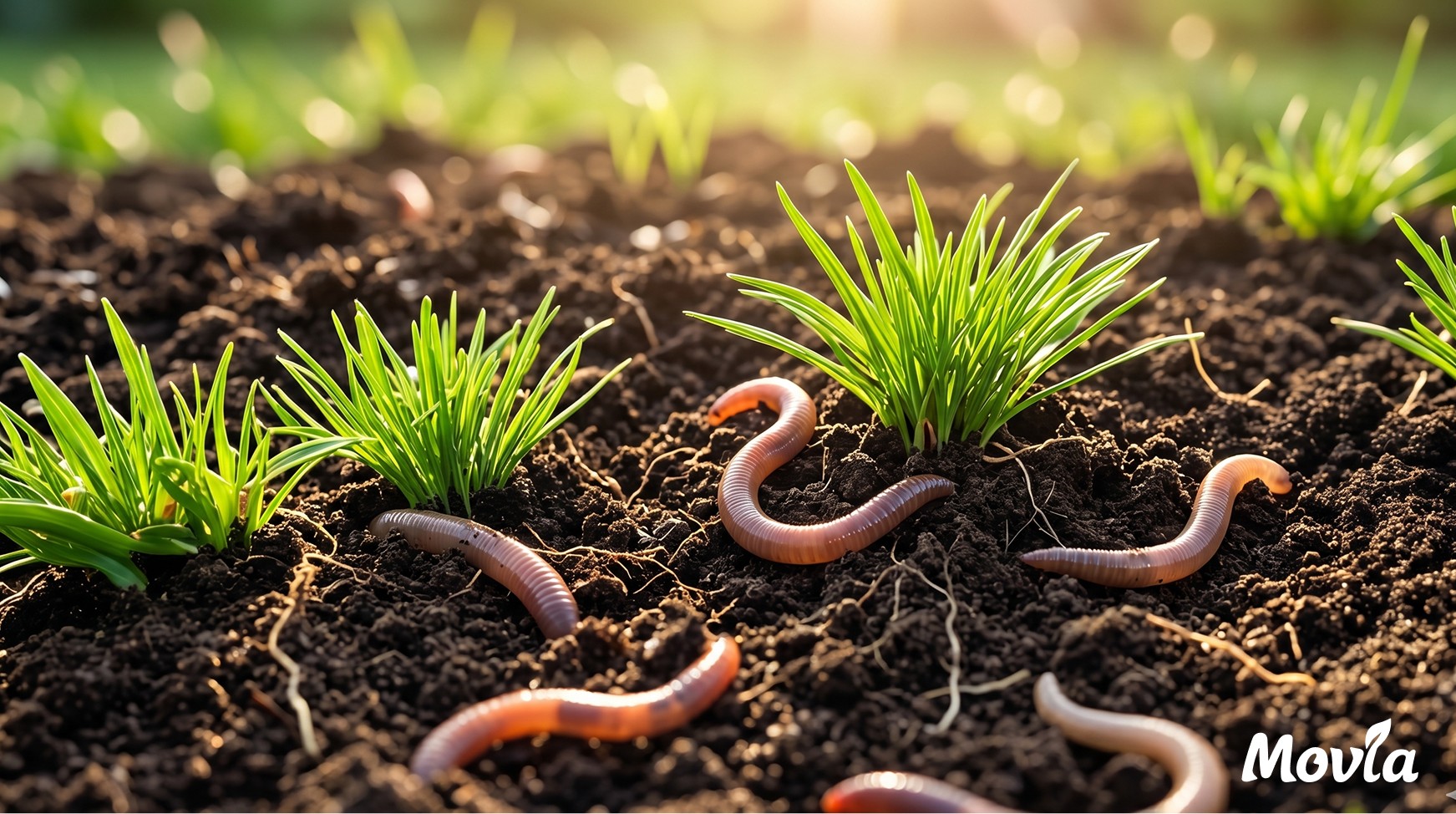
If dry, yellow patches appear on your lawn and the plants wilt easily, there is a good chance the problem is underground. One of the most common causes is the so-called lawn grubs, which eat the roots and gradually destroy the lawn.
Recognizing this problem in time and responding correctly is important to prevent greater damage.
If dry, yellow patches appear on your lawn and the plants wilt easily, there is a good chance the problem is underground. One of the most common causes is the so-called lawn grubs, which eat the roots and gradually destroy the lawn.
Recognizing this problem in time and responding correctly is important to prevent greater damage.
If grass pulls easily out of the ground — the problem is not on the surface, but in the roots.
If grass pulls easily out of the ground — the problem is not on the surface, but in the roots.
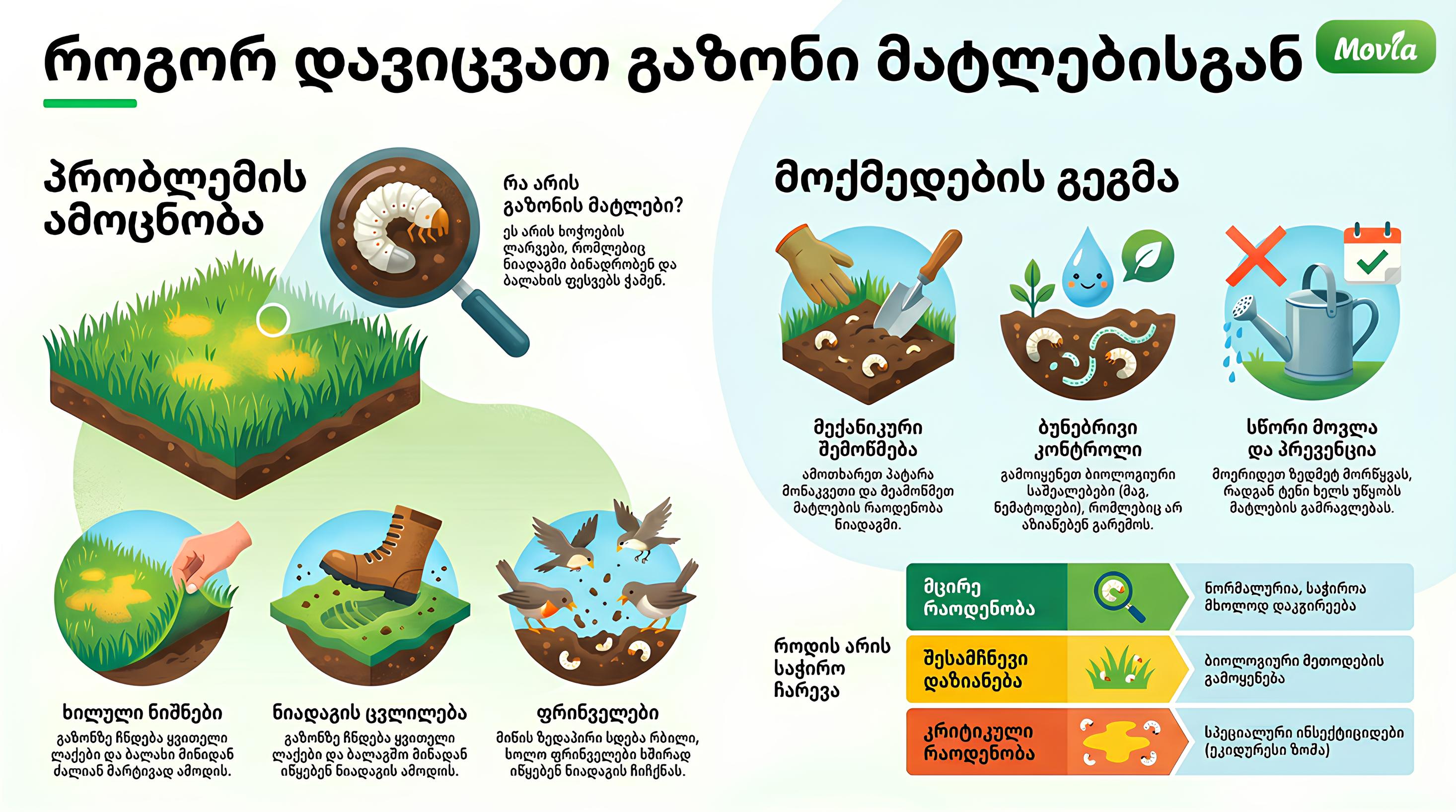
What are lawn grubs?
These are beetle larvae that live in the soil and feed on grass roots. They are especially active during the warm season.
How do we identify the problem?
Main signs include:
Yellow or dried patches on the lawn
Grass pulls up easily from the ground
The soil surface is soft and unstable
Birds or other animals often dig in the soil
Why is this dangerous?
Grubs damage the root system, preventing the grass from getting nutrients and water. If the problem is not addressed in time, the lawn can be completely destroyed.
How do we deal with them?
Mechanical inspection
Dig up a small section and inspect the soil — if you see many grubs, action is needed.Natural methods
There are biological treatments (for example, nematodes) that destroy grubs without harming the environment.Proper watering and care
A healthy lawn is more resilient. Overwatering, on the other hand, contributes to worsening the problem.Special treatments if needed
If the problem is serious, special insecticides are used, but this should be the last step.
💡 Pro Tip:
Low numbers of grubs are normal — the problem starts when their numbers increase significantly.
What are lawn grubs?
These are beetle larvae that live in the soil and feed on grass roots. They are especially active during the warm season.
How do we identify the problem?
Main signs include:
Yellow or dried patches on the lawn
Grass pulls up easily from the ground
The soil surface is soft and unstable
Birds or other animals often dig in the soil
Why is this dangerous?
Grubs damage the root system, preventing the grass from getting nutrients and water. If the problem is not addressed in time, the lawn can be completely destroyed.
How do we deal with them?
Mechanical inspection
Dig up a small section and inspect the soil — if you see many grubs, action is needed.Natural methods
There are biological treatments (for example, nematodes) that destroy grubs without harming the environment.Proper watering and care
A healthy lawn is more resilient. Overwatering, on the other hand, contributes to worsening the problem.Special treatments if needed
If the problem is serious, special insecticides are used, but this should be the last step.
💡 Pro Tip:
Low numbers of grubs are normal — the problem starts when their numbers increase significantly.
Conclusion
Summary
Lawn worms are an invisible but serious threat. Detecting them in time and proper care will help you maintain a healthy and beautiful lawn.
Prevention is always easier than restoring an already damaged area.
Blog
Read other articles
Blog
Read other articles
Blog
Read other articles




Caring for us is easy
Download the "Movla" app and find the specialist you need, or fill out an application and become a gardener yourself!
simple
reliable
safe

Caring for us is easy
Download the "Movla" app and find the specialist you need, or fill out an application and become a gardener yourself!
Caring for us is easy
Download the "Movla" app and find the specialist you need, or fill out an application and become a gardener yourself!