Plant This, Not That: Eco-Friendly Alternatives for Your Garden
Plant This, Not That: Eco-Friendly Alternatives for Your Garden
Plant This, Not That: Eco-Friendly Alternatives for Your Garden
Sali Beruchashvili
6 - 7 minutes
Eco-friendly gardening
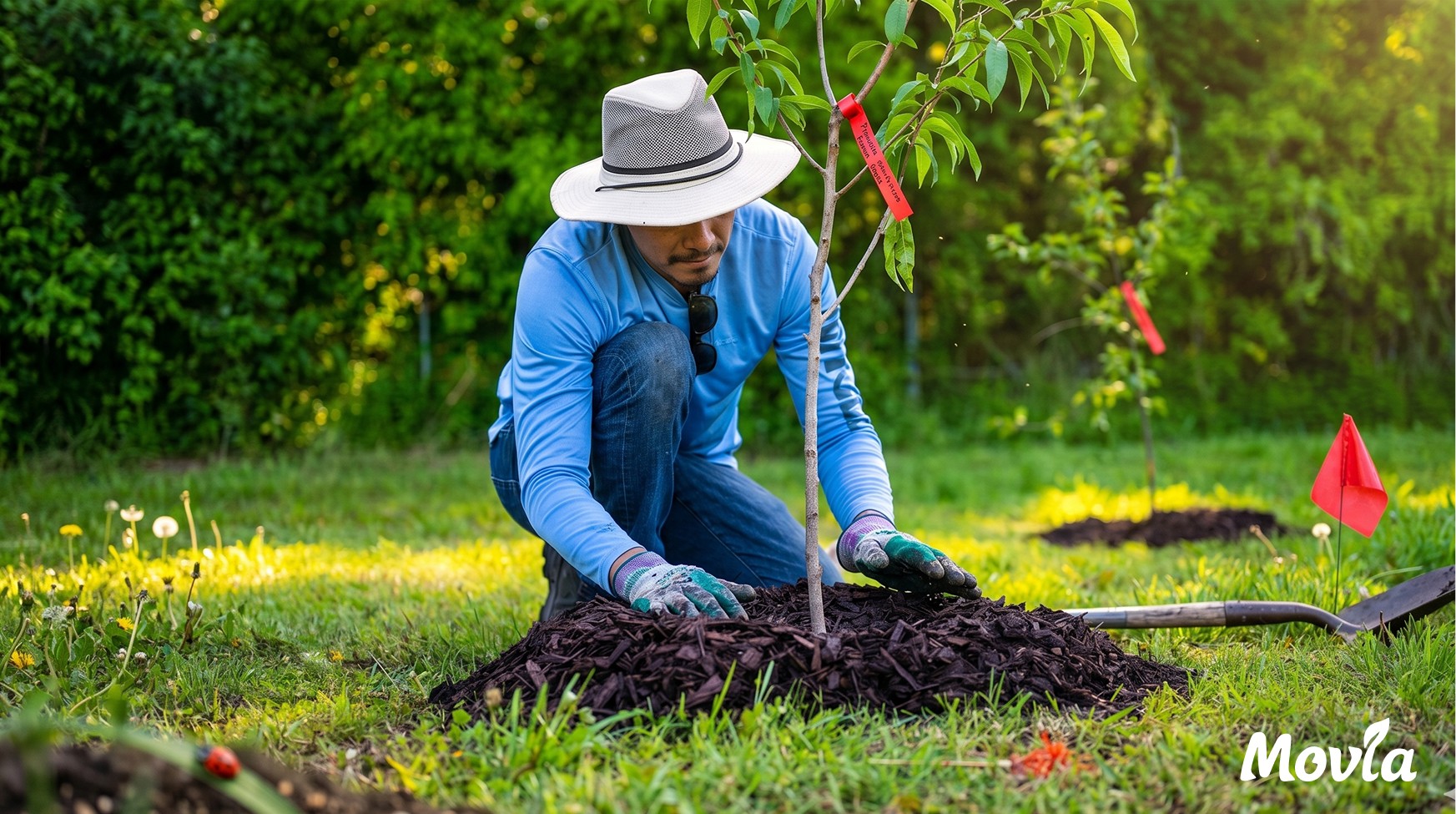
We often plant plants in our yards just for looks, yet many of them are “aggressors.” Invasive species crowd out native flora and do not provide food for our bees or birds. The solution is simple: Native Swaps — that is, replacing popular but foreign plants with local, resilient alternatives that are in harmony with our nature.
We often plant plants in our yards just for looks, yet many of them are “aggressors.” Invasive species crowd out native flora and do not provide food for our bees or birds. The solution is simple: Native Swaps — that is, replacing popular but foreign plants with local, resilient alternatives that are in harmony with our nature.
Planting native plants means less watering, less fertilizer, and much more life in your yard.
Planting native plants means less watering, less fertilizer, and much more life in your yard.
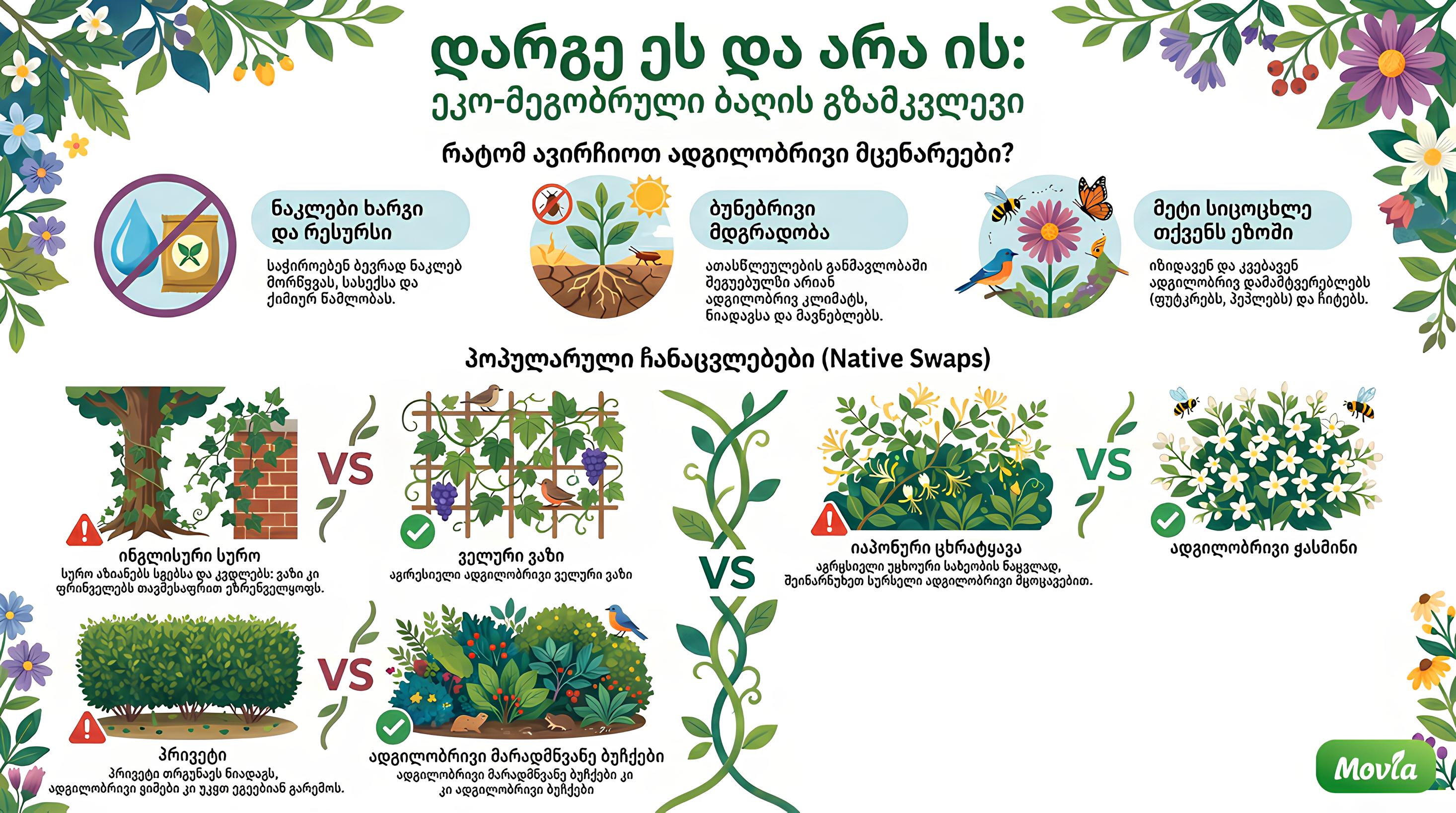
Why should we say no to invasive species? Invasive plants often grow quickly and have no natural enemies, which helps them spread uncontrollably. They disrupt biodiversity and take resources away from native plants.
Popular swaps:
Instead of Chinese/Japanese honeysuckle — plant native jasmine or honeysuckle: The Japanese species is very aggressive. Our native climbers will give you the same beauty and fragrance without disrupting the natural balance.
Instead of English Ivy — use native wild vines: Ivy often damages walls and tree bark. Native climbers, on the other hand, provide shelter and a food source for birds.
Instead of broadleaf privet (Privet) — choose native evergreen shrubs: Privet often suppresses other plants in the soil. Native varieties are better adapted to our climate and need less watering.
Benefits of native plants:
Resilience: They have adapted to our soil and pests over thousands of years.
Economy: They require less water, fertilizer, and chemical treatment.
Biodiversity: They attract native pollinators (bees, butterflies) and birds.
Why should we say no to invasive species? Invasive plants often grow quickly and have no natural enemies, which helps them spread uncontrollably. They disrupt biodiversity and take resources away from native plants.
Popular swaps:
Instead of Chinese/Japanese honeysuckle — plant native jasmine or honeysuckle: The Japanese species is very aggressive. Our native climbers will give you the same beauty and fragrance without disrupting the natural balance.
Instead of English Ivy — use native wild vines: Ivy often damages walls and tree bark. Native climbers, on the other hand, provide shelter and a food source for birds.
Instead of broadleaf privet (Privet) — choose native evergreen shrubs: Privet often suppresses other plants in the soil. Native varieties are better adapted to our climate and need less watering.
Benefits of native plants:
Resilience: They have adapted to our soil and pests over thousands of years.
Economy: They require less water, fertilizer, and chemical treatment.
Biodiversity: They attract native pollinators (bees, butterflies) and birds.
Conclusion
Summary
Your garden can be not only a beautiful picture, but also a living ecosystem. With small changes — by choosing native plants instead of invasive ones — you will greatly help nature and make caring for your yard easier.
Would you like your yard to become more eco-friendly? Movla will help you choose native plants and plan properly.
Blog
Read other articles
Blog
Read other articles
Blog
Read other articles



Caring for us is easy
Download the "Movla" app and find the specialist you need, or fill out an application and become a gardener yourself!
simple
reliable
safe
Caring for us is easy
Download the "Movla" app and find the specialist you need, or fill out an application and become a gardener yourself!
Caring for us is easy
Download the "Movla" app and find the specialist you need, or fill out an application and become a gardener yourself!