Creating a Garden: How to Arrange Plants in Space | Guide
Creating a Garden: How to Arrange Plants in Space | Guide
Creating a Garden: How to Arrange Plants in Space | Guide
Sali Beruchashvili
6-7 Minutes
Garden planning and arrangement
Introduction
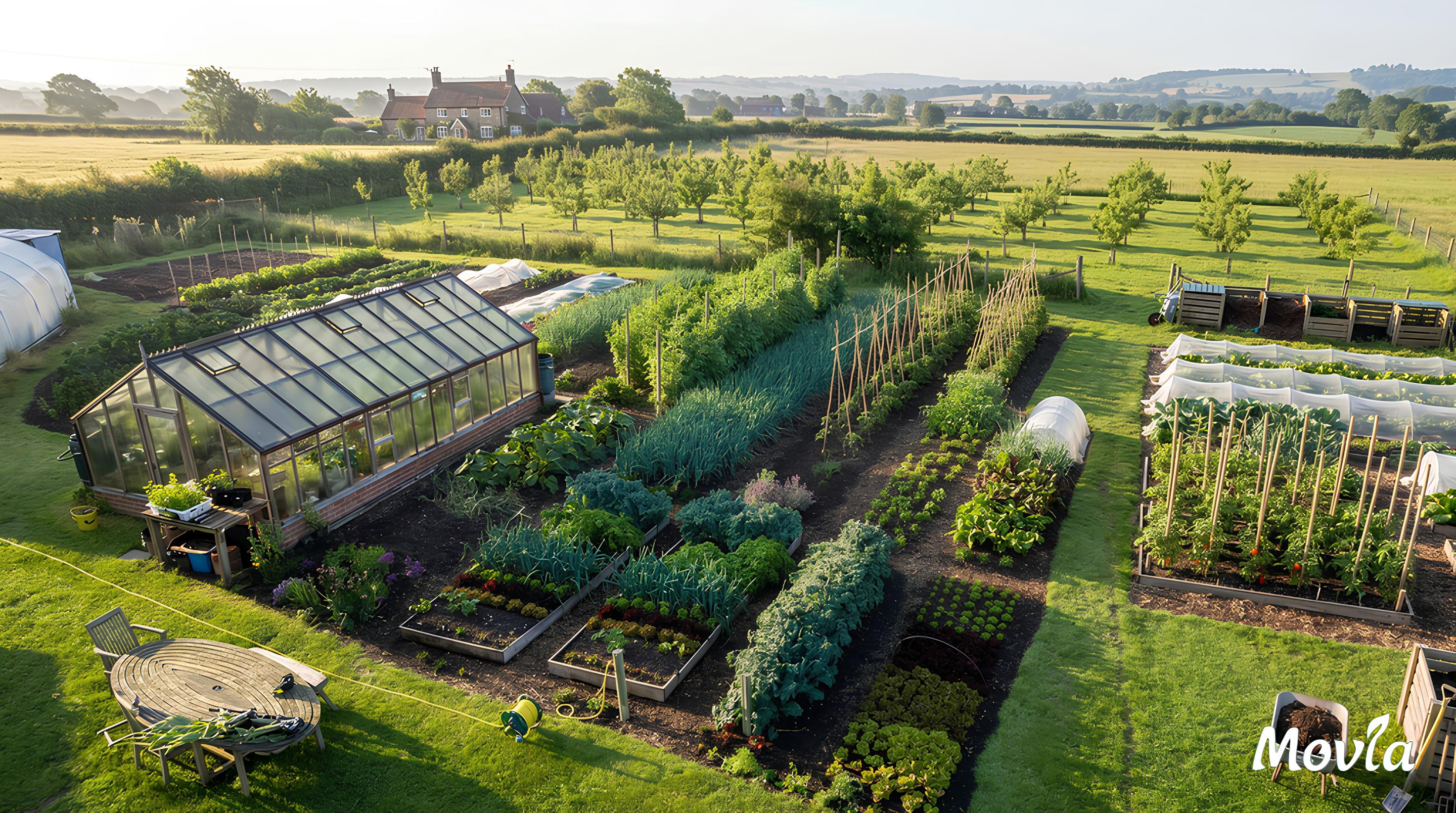
Garden creation often begins with great enthusiasm, but in practice the most common mistake happens right at the planning stage: the light requirements of plants are not properly taken into account. As a result, after a few years the garden turns into a space where plants shade one another. Light for a plant is the same as food — without it growth slows, flowering weakens, and yields decrease. Therefore, before you pick up a shovel, it is essential to properly distribute the garden's “invisible measure” — light and space.
Introduction
Garden creation often begins with great enthusiasm, but in practice the most common mistake happens right at the planning stage: the light requirements of plants are not properly taken into account. As a result, after a few years the garden turns into a space where plants shade one another. Light for a plant is the same as food — without it growth slows, flowering weakens, and yields decrease. Therefore, before you pick up a shovel, it is essential to properly distribute the garden's “invisible measure” — light and space.
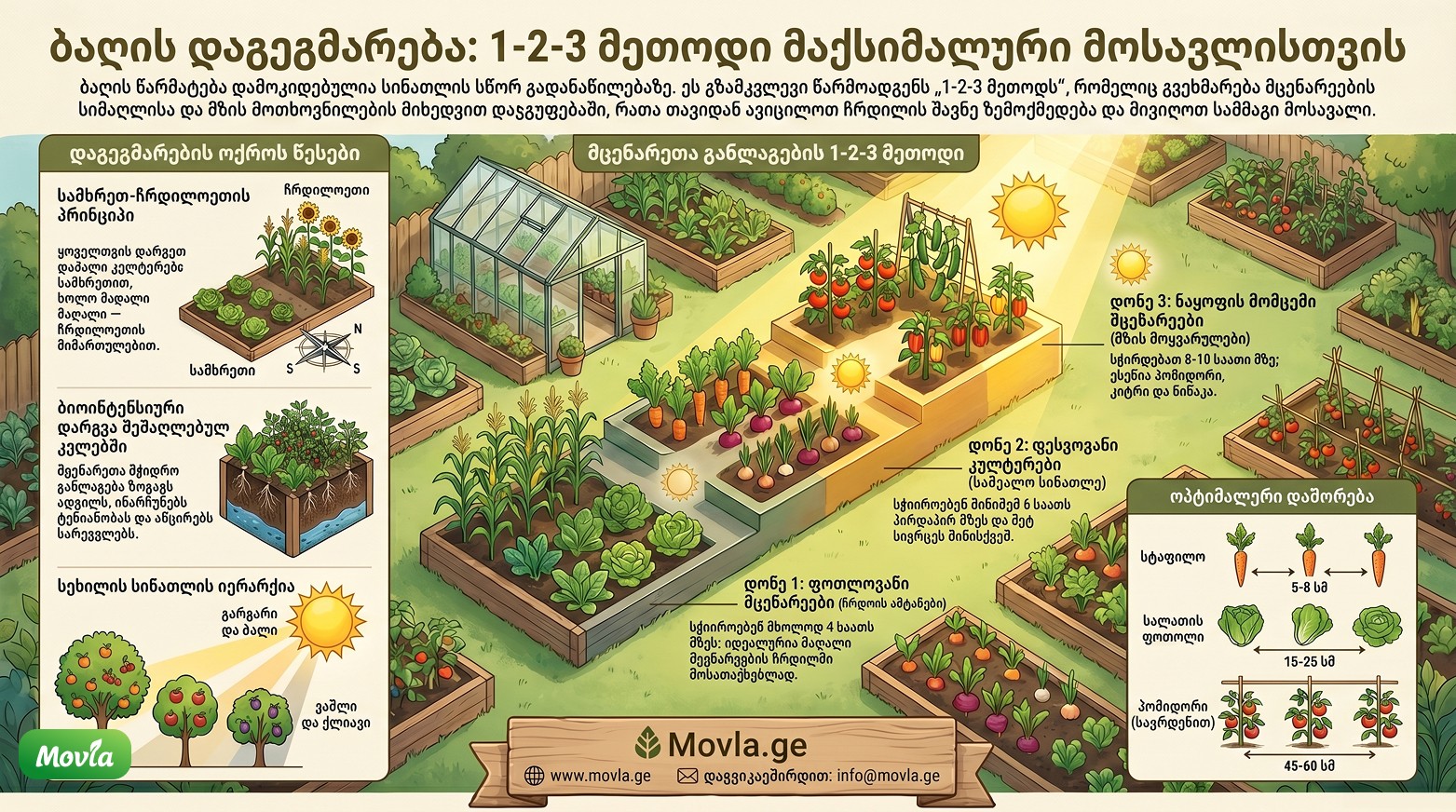
The secret of the ideal garden lies in the proper arrangement of plant heights: always plant low-growing crops to the south, and tall ones to the north.
The secret of the ideal garden lies in the proper arrangement of plant heights: always plant low-growing crops to the south, and tall ones to the north.
Garden planning with a forward-looking vision: a good garden is created not for one season, but for years. When planning, it is important to imagine what the plot will look like 10 years from now, when the trees reach full size. The vegetable garden should always be placed in the part where sunlight reaches for the longest time, and the trees should be planted so that their shade touches other crops as little as possible.
The advantage of intensive planting in raised beds. We use the biointensive method. This means placing plants more closely together, which saves space, retains moisture in the soil, and reduces weed growth.
The 1-2-3 method of plant placement. To avoid confusion, divide plants into three levels according to what you get from them:
Level 1 - leafy plants (spinach, lettuce, kale): they need minimal sun (about 4 hours) and have a shallow root system. They do well even in the shade of taller plants.
Level 2 - root crops (carrots, radishes, onions): they require at least 6 hours of direct sun and more space underground.
Level 3 - fruiting plants (tomatoes, cucumbers, peppers, fruit trees): these are "energy eaters." They need 8-10 hours of direct sun and deep, fertile soil.
The hierarchy of fruit trees by light. Remember that not all trees tolerate shade equally. Those that require the most light are: apricot, cherry, and almond. They are followed by peach and quince, while pear, apple, and plum are more tolerant.
Garden planning with a forward-looking vision: a good garden is created not for one season, but for years. When planning, it is important to imagine what the plot will look like 10 years from now, when the trees reach full size. The vegetable garden should always be placed in the part where sunlight reaches for the longest time, and the trees should be planted so that their shade touches other crops as little as possible.
The advantage of intensive planting in raised beds. We use the biointensive method. This means placing plants more closely together, which saves space, retains moisture in the soil, and reduces weed growth.
The 1-2-3 method of plant placement. To avoid confusion, divide plants into three levels according to what you get from them:
Level 1 - leafy plants (spinach, lettuce, kale): they need minimal sun (about 4 hours) and have a shallow root system. They do well even in the shade of taller plants.
Level 2 - root crops (carrots, radishes, onions): they require at least 6 hours of direct sun and more space underground.
Level 3 - fruiting plants (tomatoes, cucumbers, peppers, fruit trees): these are "energy eaters." They need 8-10 hours of direct sun and deep, fertile soil.
The hierarchy of fruit trees by light. Remember that not all trees tolerate shade equally. Those that require the most light are: apricot, cherry, and almond. They are followed by peach and quince, while pear, apple, and plum are more tolerant.
Conclusion
Summary
When planning a garden, ignoring sunlight is one of the most expensive mistakes. Use the 1-2-3 method: place tomatoes in the sun, carrots in the middle, and lettuce in the shade. This way, you'll get triple the harvest from the same area.
Want a professional plan for your yard? The Movla team will help you choose the right plants and optimize the space.
👉 Contact us and create the garden of your dreams: https://movla.ge/
Blog
Read other articles
Blog
Read other articles
Blog
Read other articles



Caring for us is easy
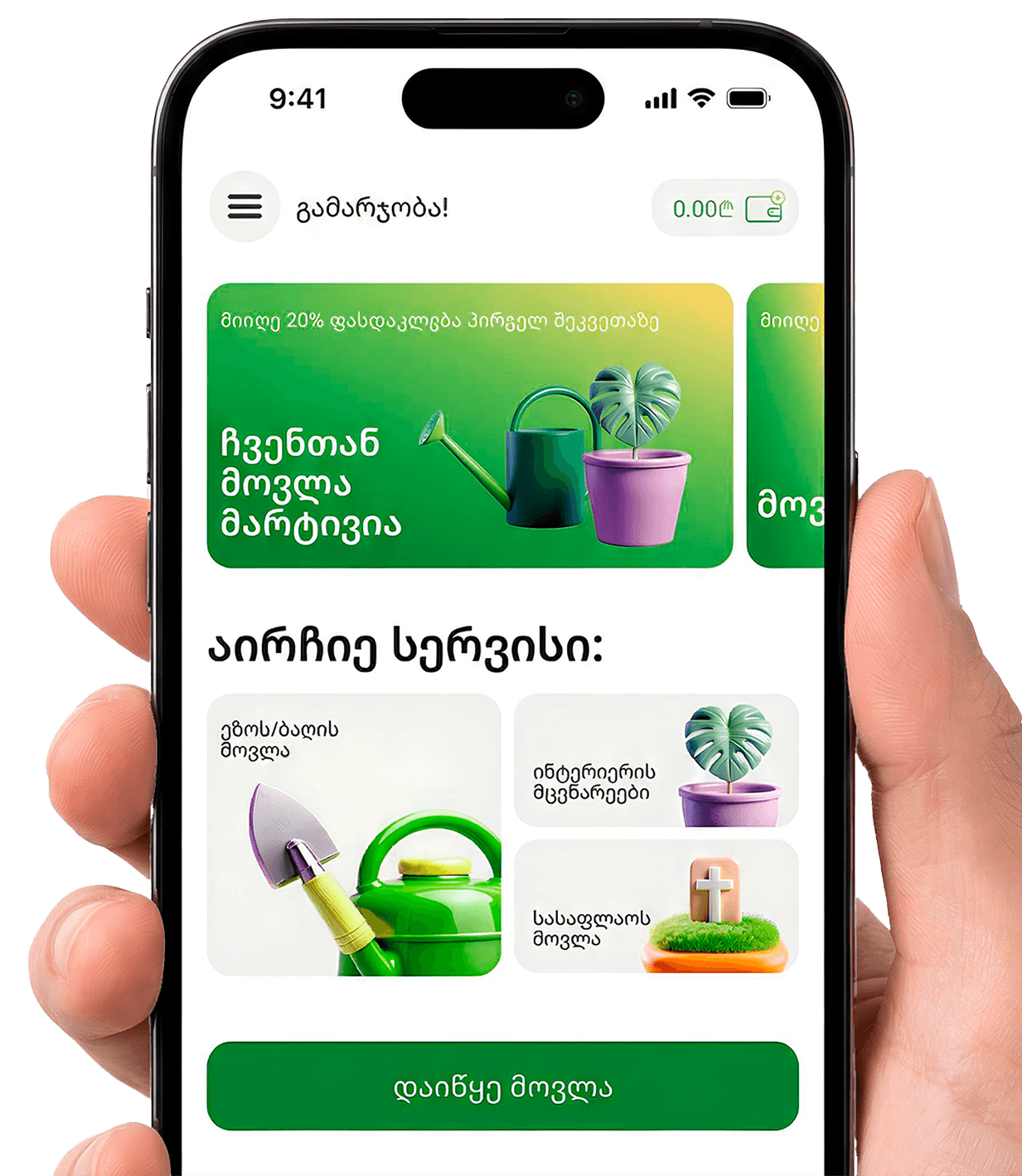
Download the "Movla" app and find the specialist you need, or fill out an application and become a gardener yourself!
simple
reliable
safe
Caring for us is easy
Download the "Movla" app and find the specialist you need, or fill out an application and become a gardener yourself!
Caring for us is easy
Download the "Movla" app and find the specialist you need, or fill out an application and become a gardener yourself!