
 Garden care
 Indoor plants
 Cemetery care
 Regular care
White gravel on a grave: which stones to choose and how to lay them
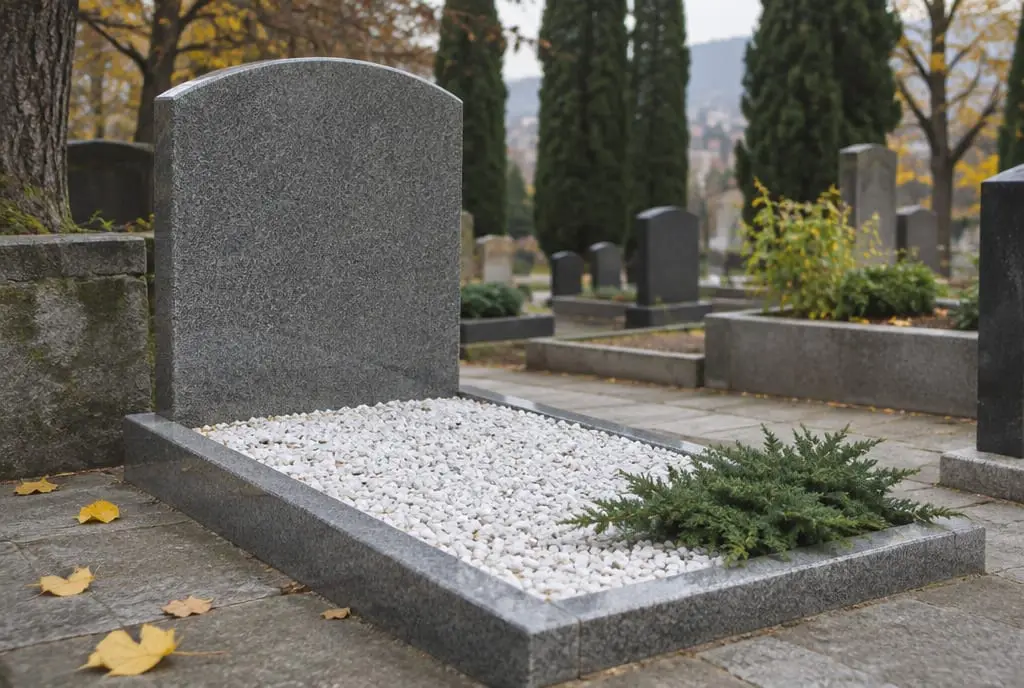
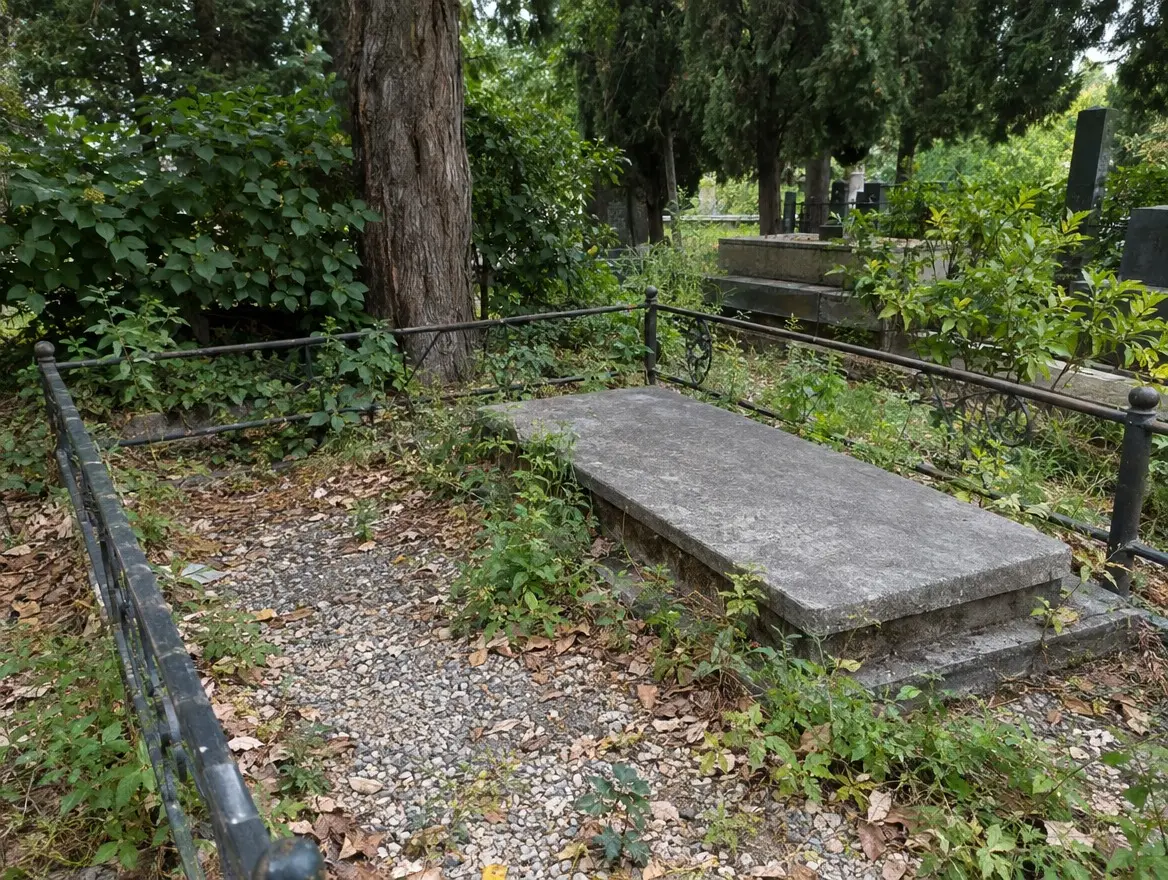
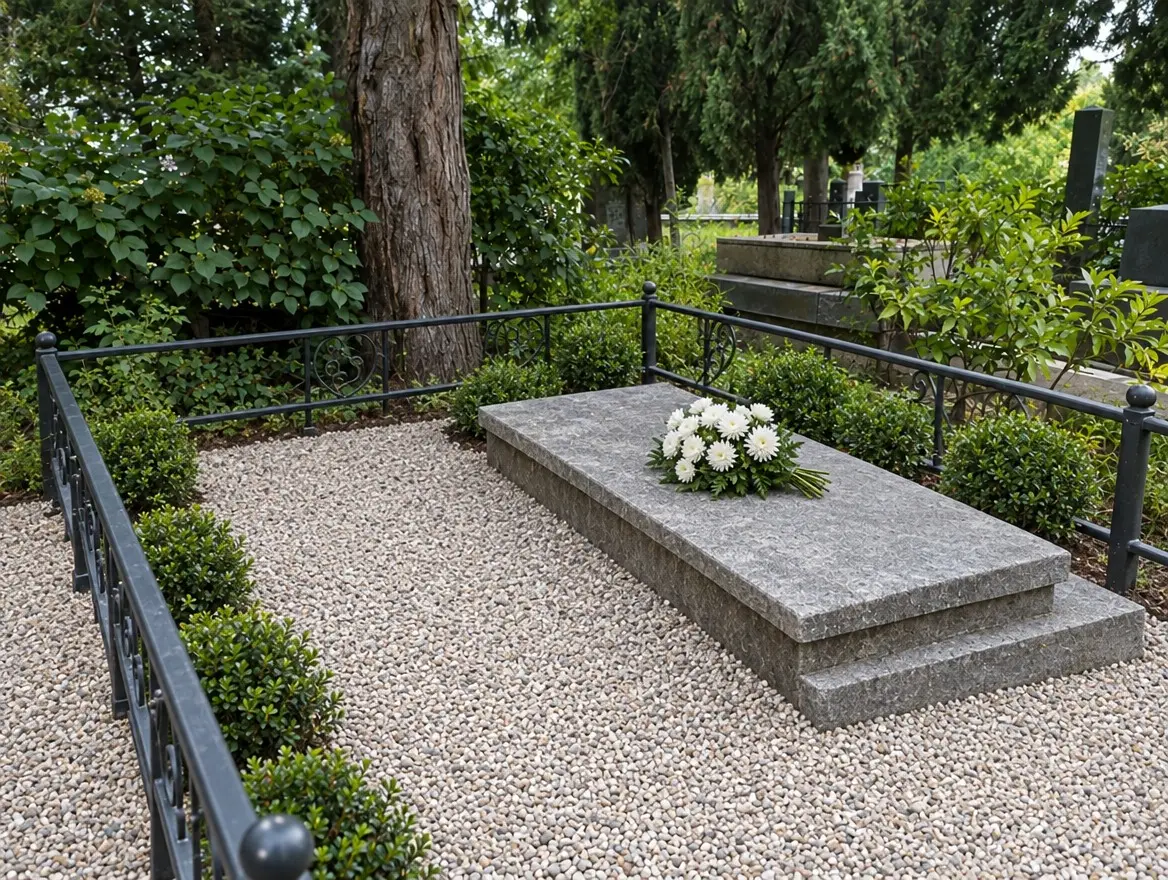
White gravel keeps a grave neat for years if there is geotextile underneath and the layer is 3–5 cm deep. On a new grave, wait a little: the ground takes about a year to settle, and gravel laid before that sinks with it.

- When to lay the gravel
- Which gravel to choose
- How much gravel you need
- How to lay it, in six steps
- Flowers with gravel
- Looking after the gravel
- Questions people ask
When to lay the gravel
The soil of a new grave settles during the first year, especially after rain and winter. Gravel laid too early mixes with the soil and the surface turns uneven. So wait for the ground to settle first; then, if needed, top it up with soil and level it.
On an older grave you can lay gravel on any dry day when the ground is neither frozen nor muddy. The weeks before Easter are the busiest of the year at cemeteries, so see to it a week or two early.
Which gravel to choose
Building suppliers and stonemasons' yards usually offer four kinds for a grave.
What you will find
Marble chippings
Brilliant white and angular, often sold as "kroshka". Beautiful, but dust and moss show on it quickly.
River pebbles
Round and smooth, grey or off-white. Dirt shows less, and they scatter less underfoot.
Granite chippings
Grey, black or pinkish. Harder than marble, and they keep their colour for a long time.
Dyed stones
The dye fades in the sun within a few years. If you want colour, choose naturally coloured stone.
Think about size too. Shops call it the grade and give it in millimetres:
- 5–10 mm — fine and even, but it sticks to shoes and scatters underfoot.
- 10–20 mm — the most practical for a grave: it stays put, drains well, and fallen leaves are easy to pick off.
- 20–40 mm — large and coarse. It suits a big area better than a small grave.
How much gravel you need
The layer should be 3–5 cm deep. Thinner, and the soil shows through; thicker, and it gives way underfoot and wastes gravel.
To work it out, multiply the grave's length by its width, then by the depth of the layer, then by 1,500 — all in metres. A cubic metre of gravel weighs about 1.5 tonnes.
- One grave, 2 × 1 m, 4 cm deep: 2 × 1 × 0.04 × 1,500 = 120 kg. In 25 kg bags, that is five.
- Two graves side by side, 2 × 2 m: about 240 kg, or ten such bags.
- Add 10% on top: some goes on levelling and along the edges.
How to lay it, in six steps
- Clear the grave: take away old flowers, dry twigs and litter, and pull grass and weeds out by the root.
- Level the soil and firm it lightly. Leave it sloping slightly away from the headstone, so rainwater doesn't collect at its base.
- Lay the geotextile. Overlap the pieces by 10–15 cm and tuck the edges in along the grave's border.
- If the grave has no border, set a narrow strip of stone or metal along the edge, so the gravel doesn't spill onto the path.
- Pour the gravel and spread it evenly with a rake.
- Finish by pouring water over it from a watering can: the dust washes down and the stones come up clean and white.
Flowers with gravel
Gravel and flowers get on fine together. Where you want a plant, cut a cross in the geotextile, fold the corners under and plant there. Then put the gravel back around it.
On a sunny grave, lavender and low, creeping juniper do well: both need little water, and the juniper stays green all winter. Movla can plant flowers too, as you ask. You will find the prices on the grave care page.
Looking after the gravel
- Don't leave fallen leaves and needles for long: they rot between the stones and stain the white.
- Once or twice a year, for instance before Easter and in autumn, turn the gravel over with a rake and rinse it.
- In the shade, gravel sometimes turns green. Scrub it with a stiff brush and water. Vinegar and acidic cleaners damage the surface of marble.
- If a weed does come through, pull it out by the root while it is small. The wind brings its seed, and it sprouts in the dust that gathers on the stones.
- Every two or three years, add a thin fresh layer on top.
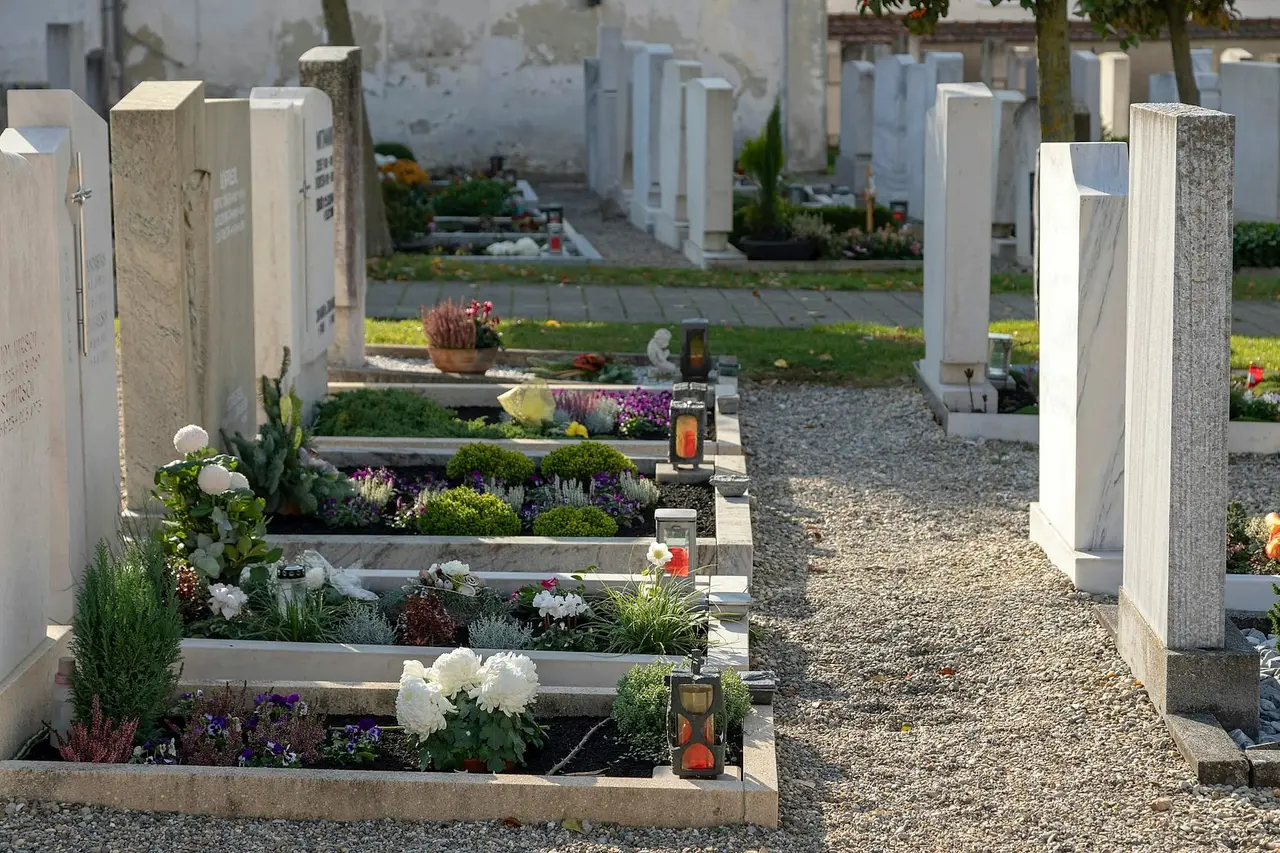 If you can't get to the grave often:Caring for a grave from afar: how to arrange it with peace of mindCemetery · 4 min
Questions people ask
Can I pour gravel straight onto the soil?
You can, but within a year or two it sinks into the soil and grass comes up through it. Geotextile stops both and still lets water through.
Can it be done in winter?
Yes, on a dry day without frost. Don't lay it on frozen or muddy ground: the layer will sink in spring.
How long does white gravel last?
The stones themselves don't wear out, but dust and leaves slowly turn them grey. A rinse once or twice a year and a thin fresh layer every two or three years is enough.
What kind of geotextile should I buy?
Building suppliers sell it by weight per square metre. For a grave, 150–200 grams per square metre is plenty: it stops weeds and lets water through.
Comments 0
What do you need most in caring for a grave?
Comments appear at once. We delete rude ones and ads.





 Service approved!The money went to the gardener. Thank you.
 Profile under reviewOur team is reviewing your profile. You'll get a notification once it's approved.